AN Oral Contraception and Pathogen Defense Project
A more humane, easier path forward for TNR
Otter Creek Foundation is expanding into the humane management of feral and free-roaming cat and dog populations, working alongside Dakota Research Labs Inc., and NoraSuto Inc., to test and deploy oral contraception and pathogen defense technology built to support — not replace — the Trap-Neuter-Return (TNR) efforts already underway in communities everywhere. Our role is to serve as an independent testing and field deployment partner, carrying this work from the lab into real-world use so that donor support goes directly toward getting a safe, effective solution into the field.
What Is TNR, and How Far Has It Reached
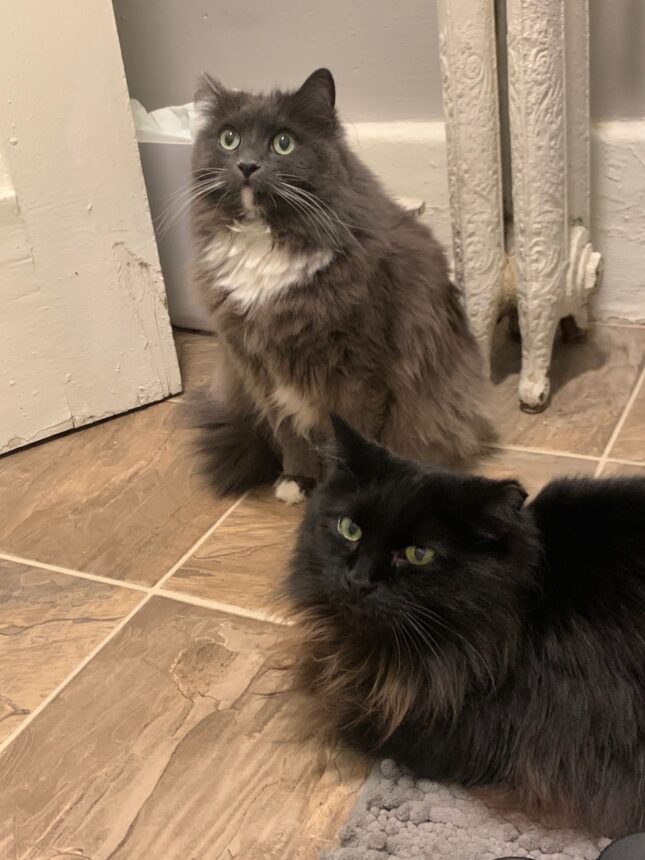
Trap-Neuter-Return involves humanely trapping community and feral cats, having them sterilized, vaccinated, and identifiable (typically ear-tipped), and returning them to their outdoor home rather than removing them permanently. It has become the accepted humane standard for managing outdoor cat populations across the United States and in many countries around the world, replacing older trap-and-remove approaches that research has repeatedly shown fail to reduce populations over time.
Free-roaming dogs present a related but distinct challenge, particularly outside the U.S., where large populations of unowned and loosely owned dogs live alongside human communities. Their management is closely tied to public health, since dogs are responsible for the vast majority of human rabies cases worldwide.
The Evidence: TNR Works
A growing body of published research supports TNR as an effective, humane population management tool:
- A long-term study at the University of Central Florida found the campus community cat population declined by 85% between 1996 and 2019, with 11 of 16 original colonies eliminated entirely over nearly three decades.
- A citizen-science study of a Chicago TNR program documented average colony declines of 54% from the time cats entered the program and 82% from each colony’s peak population.
- In Alachua County, Florida, a targeted TNR program produced a 70% decline in shelter cat intake in the program area, compared to just 13% in areas without the program — with per-capita shelter intake and euthanasia both dramatically lower where TNR was active.
- At Louisville Metro Animal Services, combining return-to-field with targeted TNR reduced feline euthanasia by 94.1% and feline intake by 42.8% over the study period.
The pattern across these studies is consistent: sustained, adequately-scaled TNR reduces both outdoor cat populations and the downstream burden on shelters — but “adequately scaled” is the operative phrase, and it’s the part that’s hardest to achieve with trapping alone.
The Cost of the Status Quo
TNR is already recognized as the more cost-effective path compared to the alternative. Sterilizing and returning a single community cat costs roughly half of what it costs to trap and euthanize one, and one estimate places the cost of attempting to trap and kill the entire U.S. feral cat population at approximately $16 billion — a figure that illustrates both the scale of the population and the impracticality of lethal control as a strategy.
Despite TNR’s proven effectiveness, its reach is limited by the same resource constraints in every community that runs a program: trapping capacity, veterinary capacity, and volunteer hours. Communities and shelters already spend meaningfully on TNR and related sheltering costs every year — the constraint isn’t will or funding intent, it’s throughput.
A Growing Population, and the Diseases That Come With It
Community and feral cat populations in the U.S. are estimated in the tens of millions, with current TNR efforts reaching only a small fraction of that population — leaving a wide and, in many areas, growing gap between the scale of the population and the reach of existing programs. Free-roaming dog populations present an even larger global picture, particularly across Asia, Africa, and Latin America.
That gap matters beyond population numbers, because feral cats and free-roaming dogs are both a source of, and a vector for, disease transmission between animals and people:
- Rabies, transmitted almost exclusively through dog bites and scratches, causes an estimated 59,000–70,000 human deaths worldwide every year and carries an estimated global economic cost of roughly $8.6 billion annually. The World Health Organization has set a goal of eliminating dog-mediated human rabies deaths by 2030, contingent on sustaining at least 70% vaccination coverage in dog populations — a target that, like TNR, is limited less by scientific feasibility than by the logistics of reaching enough animals.
- Toxoplasmosis, caused by a parasite for which domestic and feral cats are the only definitive host, is believed to have infected roughly one-third of the world’s human population, and infected cats can shed millions of parasite eggs into the environment during active infection. It has also been linked to mortality in wildlife ranging from sea otters to zoo animals, making it a concern for conservation as well as public and companion-animal health.
- Cats and dogs are also vectors for a range of other zoonotic and companion-animal pathogens, spread both to other community animals and, in some cases, to owned pets and the people who care for them.
Every one of these disease dynamics is shaped by the same underlying constraint as population control: reaching enough animals, consistently, without depending on capture.
One Delivery, Two Solutions
This is the thinking behind combining contraception and pathogen defense in the same oral delivery matrix. A caretaker distributing an oral product to a colony or a free-roaming population isn’t performing two separate interventions — they’re performing one act that addresses both the reproductive and the disease-transmission sides of the same problem, using the same access point TNR programs already struggle to scale: getting something safely into the animal without trapping it.
If a single, oral, species-specific product can eventually deliver both population control and pathogen protection, once testing and regulatory permitting are complete, it would extend the reach of every dollar and every volunteer hour already going into TNR today — reaching colonies and populations that trapping capacity alone may never reach, and doing so in a way that improves the health and welfare of community animals and the pets and people who share their environment.
Get Involved
This is a new frontier for Otter Creek Foundation, and it depends on support to move from research to real-world impact.
- Donate to help fund testing and development
- Partner with us if you run or support a TNR program and want to learn more
- Volunteer if you have field, veterinary, or research experience
Project Donation Needs
- Donations greatly assist us in funding the activities required to complete the phases of this project to include humane animal testing leading to permitting and approval to bring these products to market.
- Donors will be provided a detailed report on the proposed actions and schedule, cost projections, bi-weekly status reports, test and evaluation results, and final completion report.
- Total Investment Goal: $250,000